
Vaishno Devi Trip from Delhi: Complete Travel Guide for First-Time Visitors
By Nidhi Tiwari
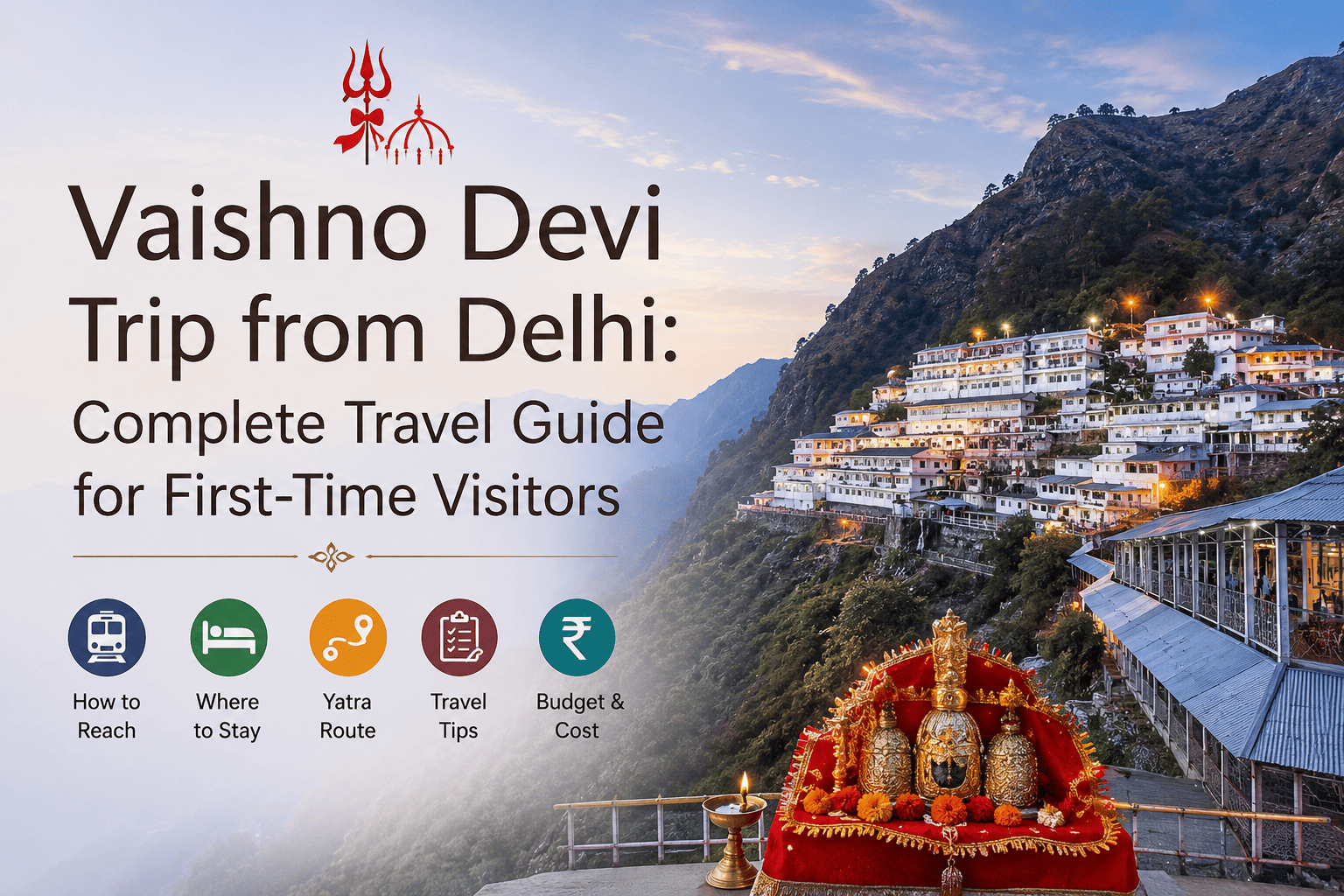
Everything a first-time pilgrim needs to know, from getting to Katra to completing the trek and darshan
Vaishno Devi is one of India's most visited pilgrimage sites, drawing millions of devotees each year to a cave shrine set roughly 5,200 feet up in the Trikuta Hills near Katra, Jammu and Kashmir. For a first-time visitor, the sheer scale of the yatra, the trek, the crowd management systems, the registration process, can feel genuinely overwhelming from a distance, even though the journey itself is well organised and manageable for most travellers with a bit of preparation.
This guide covers exactly what a first-time pilgrim travelling from Delhi needs to know: how to actually get to Katra, how the trek and darshan process works, when to go, and the practical details that make the difference between a smooth yatra and a stressful one.
How to Get from Delhi to Katra
By Train
The most popular and comfortable option for most pilgrims, with several direct trains running from Delhi to Shri Mata Vaishno Devi Katra railway station, the journey taking roughly ten to twelve hours depending on the specific train. Booking well in advance is strongly recommended, particularly during peak pilgrimage season and around major festivals, since these trains fill up quickly.
By Road
Katra is roughly 650 kilometres from Delhi, and the drive typically takes twelve to fourteen hours by car or bus, either as a direct journey or broken up with an overnight stop in Jammu. This option offers more flexibility but demands considerably more stamina than the train, particularly if attempting the drive in a single stretch.
By Air
The fastest option is flying from Delhi to Jammu, a journey of roughly ninety minutes, followed by a taxi or bus ride of around one and a half to two hours from Jammu to Katra. This is the best choice for pilgrims with limited time or anyone wanting to conserve energy for the trek itself.
Understanding the Yatra Registration Process
Every pilgrim needs a Yatra Slip, a free registration required before beginning the trek, which can be obtained online in advance through the Shri Mata Vaishno Devi Shrine Board's official portal or in person at the counters in Katra. Registering online before travelling is strongly recommended, since it saves meaningful time that would otherwise be spent queuing in Katra, particularly during peak season.
The Trek: What First-Timers Should Expect
The trek from the base camp in Katra to the Bhawan, the main temple complex, covers approximately 13 to 14 kilometres one way, with a further roughly 1.5 kilometre trek beyond the Bhawan to reach the actual cave shrine. Most pilgrims complete the ascent in six to nine hours depending on fitness level and how many rest stops are taken along the well-maintained, paved path.
For those who prefer not to walk the full distance, several alternatives exist along the route: pony and palanquin services, helicopter service between Katra and Sanjichhat, which sits close to the Bhawan, and battery-operated vehicles covering part of the route. The helicopter option in particular has become popular with pilgrims short on time or physically unable to manage the full trek, though tickets need to be booked in advance and are subject to weather conditions.
Best Time to Visit
March to October generally offers the most comfortable weather for the trek, with the monsoon months of July and August bringing the risk of landslides and slippery conditions that some pilgrims prefer to avoid. Winter, from November through February, brings cold temperatures and occasional snow near the higher sections but remains open year-round and is significantly less crowded, appealing to pilgrims who prioritise a quieter yatra over ideal trekking weather. The Navratri periods in spring and autumn are the single busiest times of year and require particularly careful planning around accommodation and registration.
Where to Stay
Katra offers accommodation across every budget, from basic dharamshalas and shrine board guesthouses to private hotels of varying comfort levels, and booking ahead is strongly advised during peak season and Navratri. Limited accommodation also exists at Sanjichhat and Adhkuwari along the trek route itself for pilgrims choosing to break the ascent into two stages rather than completing it in one continuous trek.
Practical Tips for First-Time Pilgrims
Wear proper trekking or walking shoes rather than sandals, since the paved path, while well maintained, still involves a genuine sustained climb. Carry a light jacket even in warmer months, since temperatures drop noticeably as elevation increases toward the Bhawan. Start the trek in the early morning or evening where possible to avoid the most intense midday heat during summer months, and carry a refillable water bottle, since water stations are available at regular intervals along the route.
Getting Started
A Vaishno Devi trip from Delhi is genuinely manageable for a first-time pilgrim provided the basics are handled in advance: book train tickets or flights early, register for the Yatra Slip online before travelling, and choose a trek pace and mode, walking, pony, or helicopter, that genuinely matches your fitness level rather than what feels expected. The journey itself, both the physical trek and the spiritual experience of the darshan, tends to leave a lasting impression on most first-time visitors well beyond what the logistics alone would suggest.
Frequently Asked Questions
How many days should I plan for a Vaishno Devi trip from Delhi?
Three days is a comfortable minimum: one day travelling to Katra, one day for the trek and darshan, and one day for the return journey. Pilgrims wanting a more relaxed pace, or planning to visit nearby Jammu attractions as well, often extend this to four or five days.
Is the trek suitable for elderly pilgrims or young children?
Yes, with the right preparation. Pony, palanquin and helicopter services exist specifically to accommodate pilgrims who cannot manage the full walking trek, and many elderly pilgrims and families with young children complete the yatra successfully using these options.
Do I need to book the Yatra Slip in advance, or can it be done in Katra?
Both are possible, but booking online in advance is strongly recommended, since it avoids the queues at the registration counters in Katra, which can be lengthy during peak season.
Is the helicopter service reliable, or does it get cancelled often?
The helicopter service operates subject to weather conditions and can be delayed or cancelled during poor visibility, particularly during monsoon season. Pilgrims relying on it should ideally build some schedule flexibility in case of a weather-related delay.