
Train vs Bus vs Flight: Which Is Best for Your Trip?
By KindQuest Travel
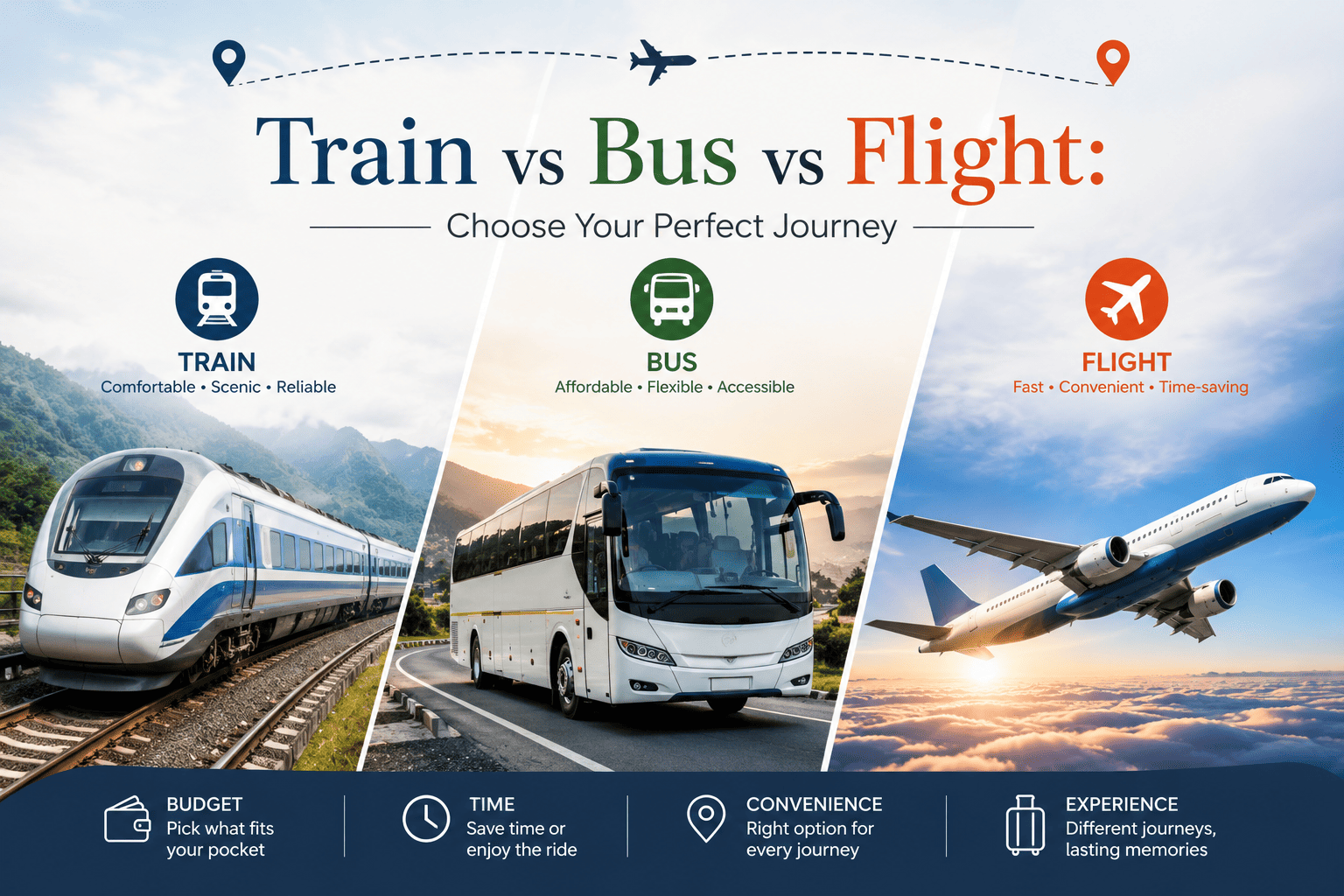
Booking a trip usually starts with one deceptively simple question: how do I actually get there? Train, bus and flight all get you from A to B, but each comes with its own trade-offs in cost, time, comfort and convenience — and the right choice isn't the same for every journey.
Train: Best for Comfort and Scenic, Mid-Distance Travel
Trains hit a sweet spot for journeys of a few hundred kilometres — more legroom than a bus, the freedom to walk around, and stations usually right in the city centre.
Pros: comfortable seating, city-centre stations, minimal security checks, scenic routes, generally reliable schedules. Cons: slower than flying over long distances, and prices climb for premium classes or last-minute bookings. Best for: mid-distance trips (roughly 2–8 hours) and travellers who want to relax without airport hassle.
Bus: Best for Budget Travel and Short Hops
Buses are usually the cheapest way to travel, and they reach places trains and flights simply don't.
Pros: lowest fares, widest route network including smaller towns, frequent departures, no need to arrive hours early. Cons: slower and more affected by road traffic and weather, comfort varies by operator. Best for: short to medium trips, tight budgets, and routes not well served by train or air.
Flight: Best for Long Distances and Saving Time
Once the distance gets large — crossing states, countries or coastlines — flying usually wins on speed alone, though airport time and transfers eat into those savings.
Pros: by far the fastest option for long distances, frequent schedules on popular routes, competitive fares if booked ahead. Cons: airports often sit outside the city, security and check-in add time, luggage restrictions apply. Best for: long-distance trips, time-sensitive travel, international journeys.
How to Choose
- How far are you going? Short and medium distances usually favour bus or train; long distances favour flying.
- What's your budget? Buses are typically cheapest, trains mid-range, flights can go either way depending on booking timing.
- How much time do you have? Factor in airport transfers and security, not just flight duration.
- How much comfort do you need? Long train journeys generally offer more space and fewer stops than long bus rides.
- Is your destination well connected? Smaller towns are often only reachable by bus.
There's no single winner — the best option depends on your route, budget, and how much you value time versus cost. As a rough rule: choose the bus when watching your budget or heading off the main routes, the train for a comfortable mid-distance journey, and a flight when distance is long and time matters most.