
The Jurassic Park of India: Malshej Ghat Travel Guide
By KindQuest Travel
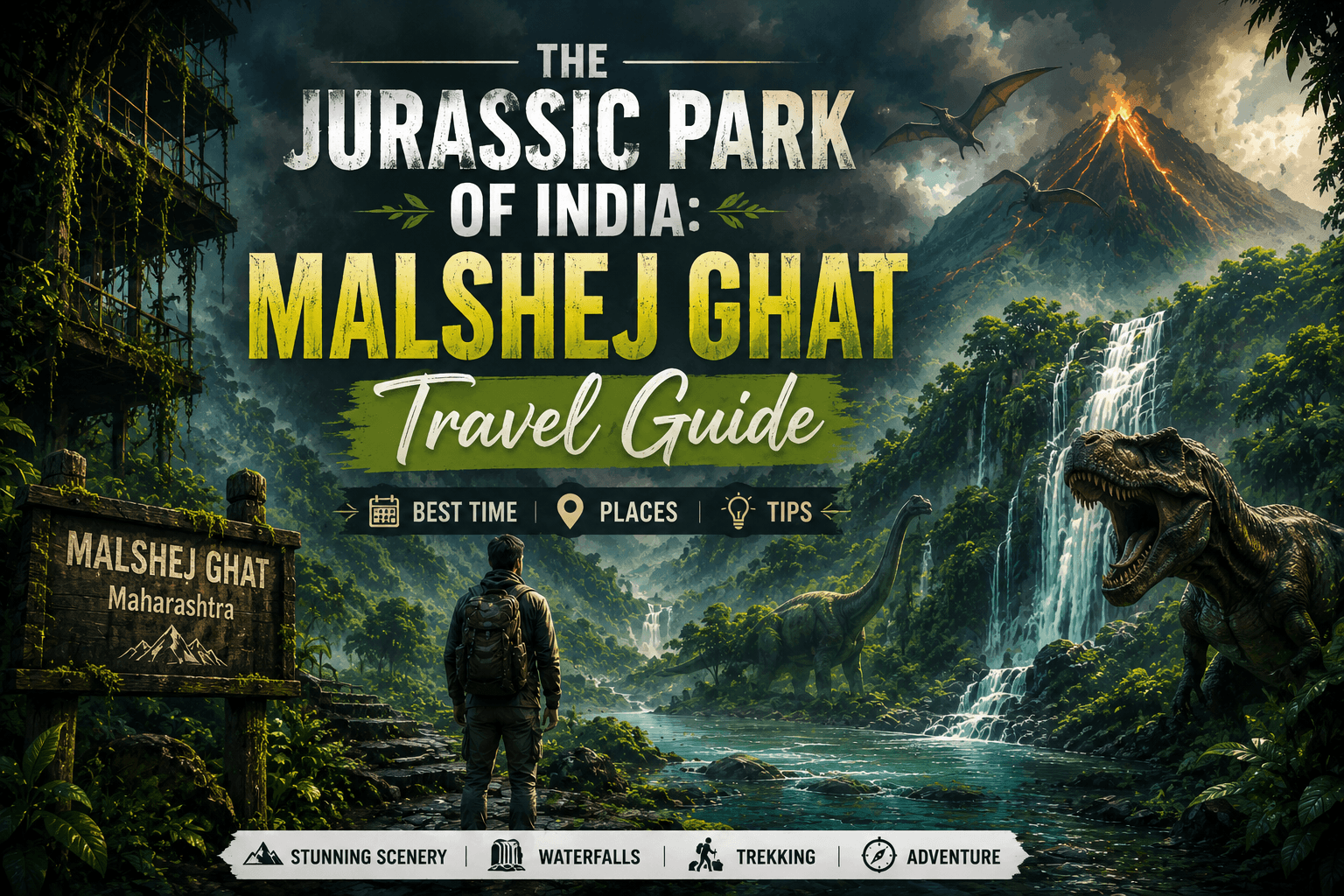
Tucked into the Sahyadri range in Thane district, roughly midway between Mumbai and Nashik, Malshej Ghat is one of Maharashtra's most striking monsoon destinations. Once the clouds roll in, this mountain pass turns into a living painting — waterfalls tumble down sheer cliffs, mist wraps around emerald hills, and the whole landscape seems to breathe.
Why Malshej Ghat Is Special
What sets it apart is the sheer drama of the landscape. The ghat road winds through hairpin bends flanked by steep, lush-green valleys, with low-hanging clouds often drifting right across the road — at times it genuinely feels like driving through the sky. Numerous seasonal waterfalls appear along the route, some right beside the road, cutting through the rock face in silvery streaks. The region is also home to the historic Harishchandragad Fort, one of Maharashtra's oldest hill forts, with ancient caves, temples, and the striking Kedareshwar Cave and its massive stone pillar.
Best Time to Visit
Malshej Ghat is at its absolute best during monsoon, June to September, when waterfalls run full and clouds create an almost otherworldly atmosphere. Post-monsoon (October–February) turns pleasant and cool — ideal for trekking without slippery trails. Summers (March–May) are hot and best avoided unless just passing through. Interestingly, winter also brings a unique visitor: thousands of flamingos migrate to nearby lake areas, turning the wetlands a delicate pink and drawing birdwatchers and photographers.
Top Things to See and Do
Waterfalls and Viewpoints
The drive itself is an experience, with countless waterfalls visible from the road in monsoon. Several designated viewpoints along the ghat offer sweeping valley vistas, especially striking when clouds roll through at eye level.
Malshej Ghat Dam and Lake
A peaceful spot to sit and take in the views — in winter the lake becomes a haven for migratory birds, including the flamingos.
Harishchandragad Fort Trek
A moderately challenging trek through dense forest and rocky patches, ending at ancient ruins and the striking Konkan Kada cliff, with a near-vertical drop and unmatched views of the Konkan region.
Pimpalgaon Joga Dam
A short distance from the main ghat, another scenic spot for photography, especially beautiful when the reservoir is full in monsoon.
Camping and Nature Walks
Several patches around Malshej are popular for monsoon camping, letting travellers wake up amid clouds and greenery, with nature walks revealing local flora and occasional wildlife.
How to Reach Malshej Ghat
From Mumbai: ~130 km, 3–4 hours via Kalyan and Murbad. From Pune: ~130 km, 3–4 hours via Manchar. Nearest railway station: Kalyan Junction. Nearest airports: Mumbai and Pune, with road transport for the rest. Self-driving is the most popular option since it lets you stop at multiple viewpoints, though state transport buses and private tour operators also run services, especially in monsoon.
Travel Tips
- Roads get slippery in heavy rain — drive cautiously around the sharp curves.
- Carry rainwear, extra clothes and waterproof footwear.
- Mobile coverage can be patchy in stretches — let someone know your plans.
- Food options are limited to small local eateries — carry snacks and water.
- Start early for the Harishchandragad trek, ideally with a local guide.
- Avoid visiting during landslide warnings, which occasionally occur in extreme monsoon spells.
Whether it's driving through clouds, chasing waterfalls, tackling a fort trek, or watching flamingos dot a winter lake, Malshej Ghat has something for every kind of traveller — an easy top pick for a monsoon getaway from Mumbai or Pune.