
Spiti Valley Road Trip: A Journey Through the Heart of the Himalayas
By KindQuest Travel
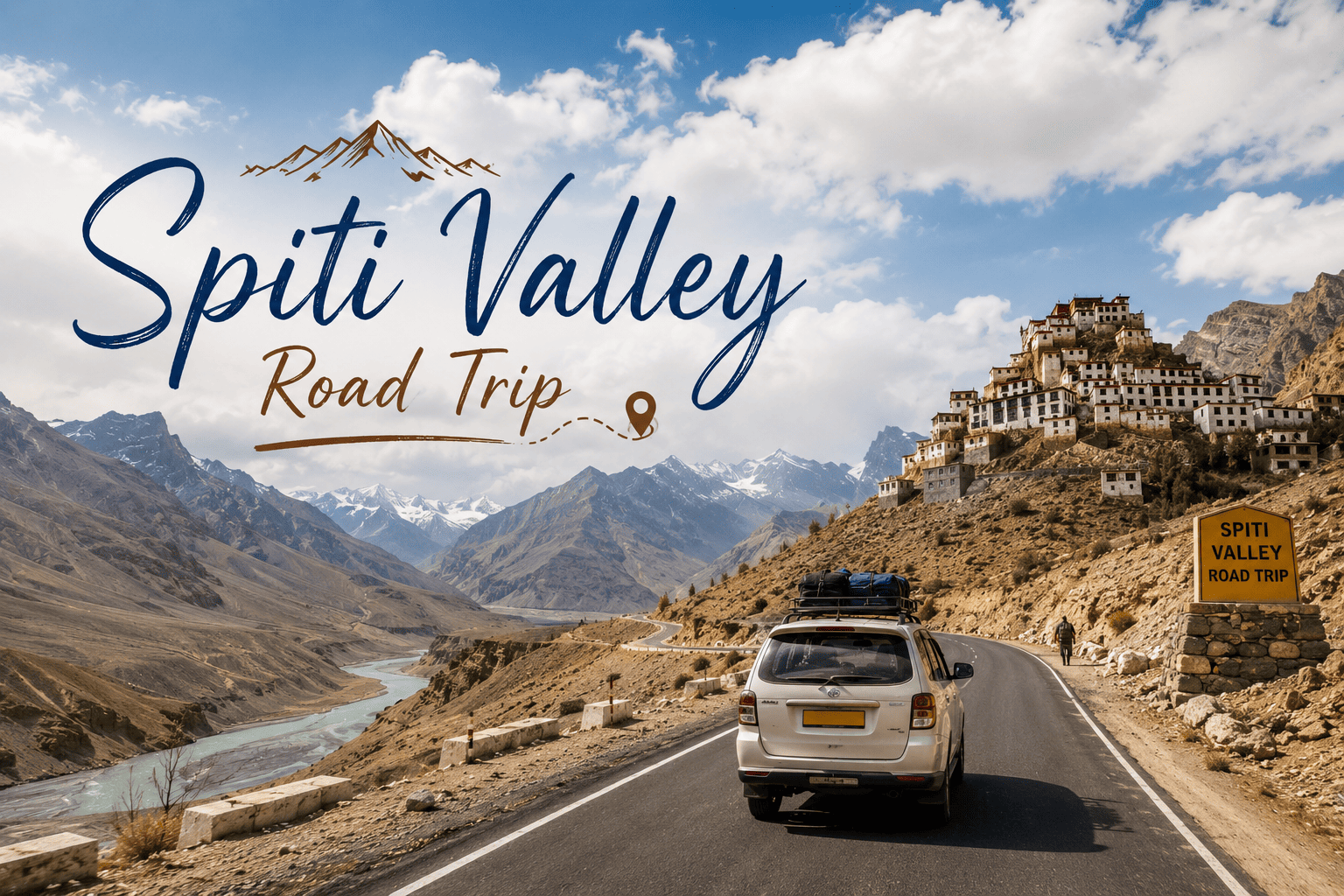
Spiti Valley doesn't look like the rest of Himachal Pradesh. Instead of green hills and pine forests, you get a cold desert of bare mountains, deep river gorges, and monasteries perched on cliffs that seem to defy gravity. Getting there is most of the point — the roads themselves are as much a part of the experience as any single destination along the way.
Choosing Your Route
There are two main ways in: the Shimla-Kinnaur route via Narkanda, Sarahan and Reckong Peo, or the Manali-Kunzum Pass route over Rohtang or the Atal Tunnel. The Kinnaur route is gentler, opens earlier, and eases you into altitude gradually, while the Manali route is more dramatic but only opens once Kunzum Pass clears of snow, usually by late May or June. Many travellers loop, entering from one side and exiting the other.
How Many Days You Need
A proper loop, with time to actually stop and explore, realistically needs 8 to 10 days. Shorter 5–6 day trips are possible entering and exiting from the same side, typically Manali, but trade off either Kinnaur's scenery or acclimatisation buffer.
Key Stops Along the Way
Chitkul, often called the last village before the Indo-Tibet border, makes a peaceful early stop. Kaza, Spiti's main town, works well as a base for exploring monasteries and villages. Key Monastery, perched dramatically on a hilltop, and Kibber, one of the highest motorable villages in the region, are both easy day trips from Kaza. Chandratal Lake, a crescent-shaped high-altitude lake near Kunzum Pass, is one of the most photographed stops on the route.
Altitude and Acclimatisation
Spiti's villages and passes sit at altitudes where altitude sickness is a real concern. Build in at least one full rest day around Kaza before pushing higher, drink more water than feels necessary, and avoid alcohol for the first couple of days. If anyone develops a persistent headache, nausea, or breathlessness that doesn't improve with rest, descend rather than push through.
Road Conditions and Driving Tips
Roads range from smooth stretches to sections that are barely more than gravel and boulders, particularly after monsoon damage. A vehicle with good ground clearance is strongly recommended, and hiring a local driver is a safer choice if you're not confident with mountain driving. Keep your fuel tank topped up, since petrol pumps are sparse once deep into the valley.
Permits
Indian citizens generally don't need special permits for most of Spiti, though areas closer to the border may require an Inner Line Permit, usually arranged easily in Kaza. Foreign nationals should check current requirements before travelling.
Best Time to Visit
The main season runs June to September, when both entry routes are typically open and roads are in their best condition. July and August bring green patches to the stark landscape, though monsoon can occasionally cause landslides on the Kinnaur side.
Packing Checklist
- Warm layers for every season — nights stay cold even in peak summer.
- Basic altitude sickness medication after consulting a doctor.
- Sufficient cash, since ATMs are unreliable in much of the valley.
- A vehicle checked thoroughly before departure, spare tyre and repair kit.
- Offline maps downloaded in advance.
A Spiti Valley road trip isn't about ticking off a checklist of viewpoints — it's about slowing down enough to take in a landscape that looks like nowhere else in India.