
Kerala Backwaters in Monsoon: Magical or Miserable?
By KindQuest Travel
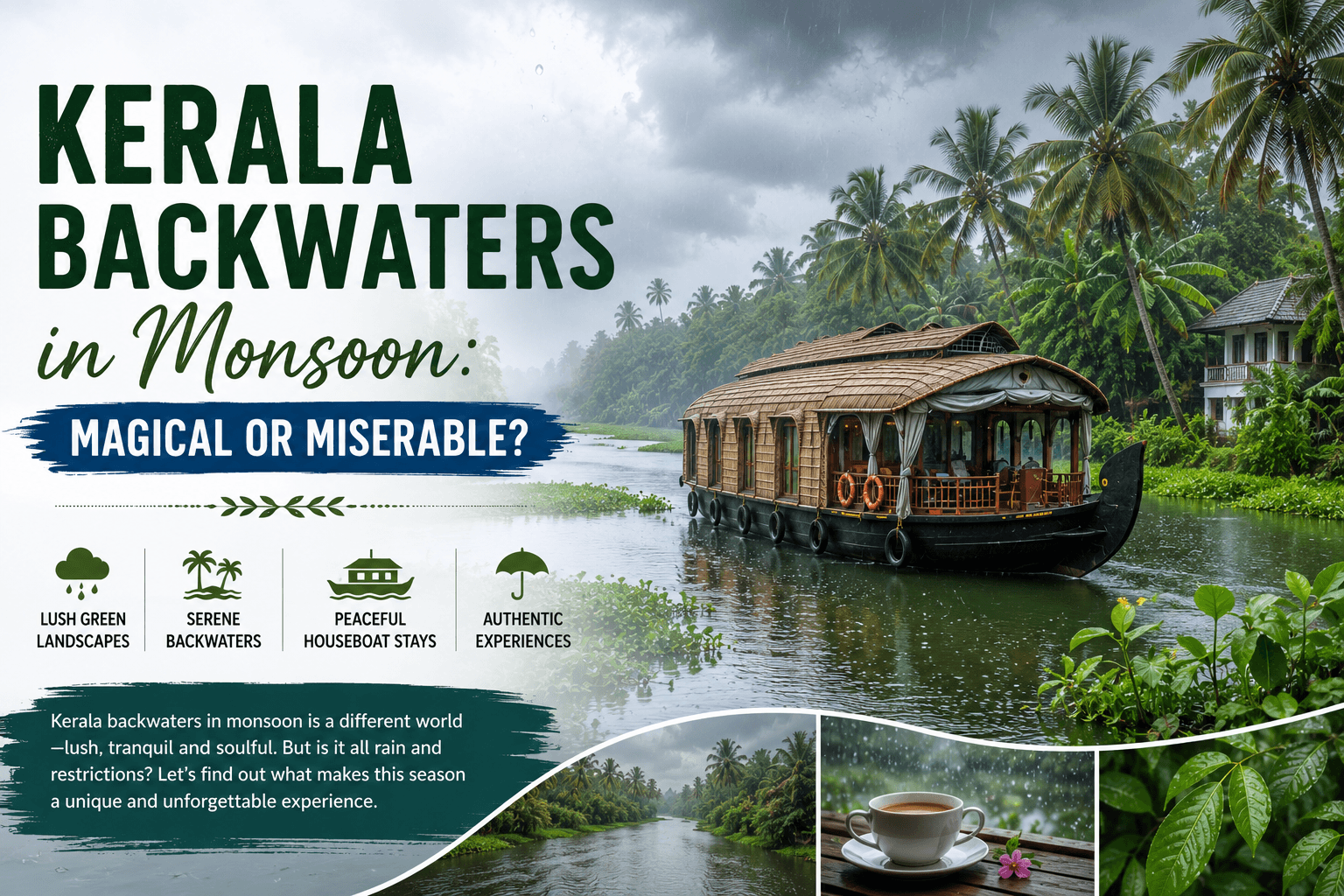
The postcard version of Kerala's backwaters is golden-hour light on still green water. The monsoon version is rain falling hard enough to bounce off the surface, houseboats rocking gently at anchor, and a very different, quieter kind of beautiful. Whether that sounds magical or miserable depends entirely on what you're going for — here's an honest breakdown.
When Monsoon Actually Hits Kerala
Kerala gets two distinct monsoons. The Southwest Monsoon runs June through September and brings heavy, sustained rainfall in off the Arabian Sea — this is the big one. The Northeast Monsoon follows in October–November with lighter, more scattered rain. Peak rainfall in backwater hubs like Alleppey and Kumarakom tends to land late June through August. Early monsoon (June) brings dramatic, intense rain; by September, showers taper and the greenery is at its absolute peak.
What the Backwaters Actually Look Like
Water levels rise noticeably, and the usual sharp line between land and water starts to blur. The greens turn saturated, almost impossibly so, and the water itself shifts to a deeper, darker jade. Mist settles over the lakes in a way that genuinely looks more Scottish Highlands than tropical Kerala. Rain comes in patterns — sometimes hours of steady drizzle, sometimes a sharp twenty-minute burst — and the sound of it on a houseboat's canopy, layered under birdsong, is one of the more memorable parts of the experience. There's also a slower, more unhurried feel to the season compared to peak, along with lower prices and noticeably fewer tourists.
The Honest Downsides
Canoe trips through the narrower canals get called off in heavy rain or strong current. Humidity stays high even as temperatures drop, which can feel muggier than expected. Flooding occasionally disrupts road transport. Photography leans moody and atmospheric rather than bright and postcard-perfect, which not everyone is looking for. And a meaningful number of houseboat operators shut down entirely from June through August, so your choice of boat is more limited.
Who Monsoon Kerala Suits — and Who It Doesn't
It works well for slow travellers, couples wanting an intimate, low-key escape, photographers chasing mood over brightness, budget travellers, and anyone booking an Ayurveda-focused trip — the monsoon is traditionally considered the best season for Ayurveda treatments in Kerala. It's a harder sell for activity-focused travellers, families who need reliable outdoor time, landscape photographers chasing bright, clear shots, anyone locked into a rigid itinerary, or travellers who struggle with humidity.
Alleppey vs Kumarakom
Alleppey keeps its canal network genuinely active through monsoon, runs more houseboats year-round than most other hubs, and even has its own dramatic monsoon beach scene. Kumarakom leans more resort-focused, with strong Ayurveda offerings and some of the best birding of the year during monsoon.
What to Pack
- A proper waterproof poncho
- Quick-dry, breathable clothing
- A waterproof bag for electronics
- Sandals with real grip, not flip-flops
- Insect repellent
- A light jacket for cooler evenings
- Rehydration salts
- A waterproof phone case
Five Things Worth Doing
- Book a houseboat with a covered deck built for watching the rain, not avoiding it.
- Visit village markets in the dry morning window before the day's rain sets in.
- Arrange a traditional Kerala feast served right on the boat.
- Book an Ayurveda treatment — conditions are considered ideal this time of year.
- Take an early-morning walk through flooded rice paddies before the crowds and the heat.
Is It Safe?
Yes, on the sheltered backwater routes used by houseboats — these aren't open water, and operators know the conditions well. Fewer houseboats run in June and July, usually at lower rates, but the ones that do operate are well-practised at monsoon conditions. Rain here tends to add to the atmosphere rather than ruin the experience, and it can make for a genuinely romantic, low-key honeymoon setting for couples who don't need constant sunshine to enjoy a trip.