
Kavad Yatra: Meaning, History, Route & Significance of the Sacred Pilgrimage
By KindQuest Travel
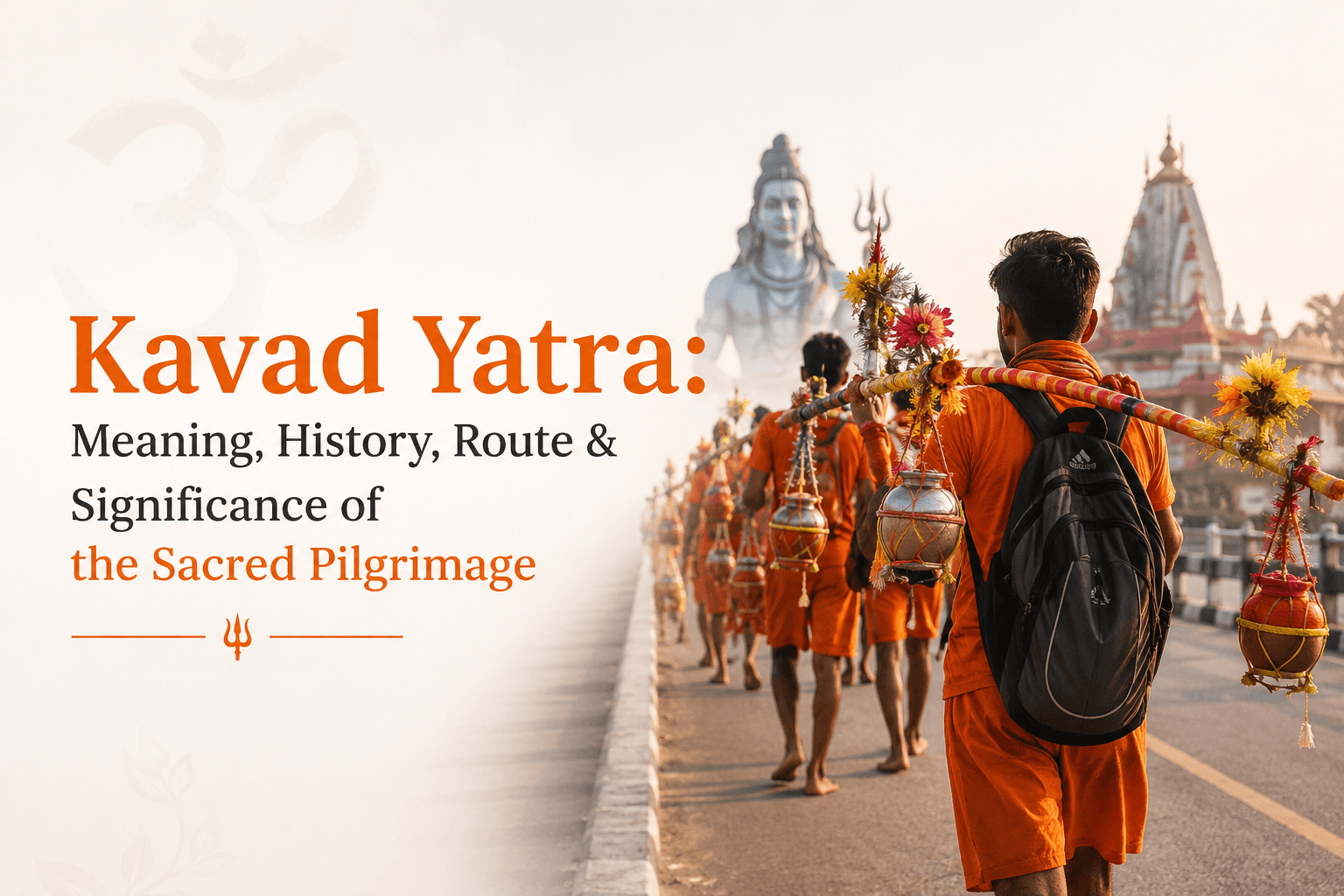
Every year during the holy month of Shravan (Sawan), millions of saffron-clad devotees take to India's roads on foot, carrying decorated bamboo poles laden with pots of holy water. This is Kavad Yatra — one of the largest annual pilgrimages in the world, and a striking display of faith, endurance and community.
What Is Kavad Yatra?
Kavad Yatra is undertaken by devotees of Lord Shiva, known as Kanwariyas, who travel to holy rivers — most commonly the Ganga at Haridwar, Gaumukh and Gangotri — to collect sacred water. They carry this water, balanced on a decorated pole called a "kavad" slung across their shoulders, all the way back to their local Shiva temples, where it's offered during the ritual of Jalabhishek.
Origin and Mythology
The roots of Kavad Yatra tie back to the story of Samudra Manthan, the churning of the ocean, during which Lord Shiva consumed the deadly Halahala poison to protect the universe. Devotees believe offering pure Ganga water to Shiva helps cool and soothe him — a gesture of gratitude and devotion. Some traditions also link the practice to Lord Parashurama, said to be the first Kanwariya.
The Route and Rituals
Kanwariyas typically begin from holy Ganga sites — Haridwar and Gaumukh among the most popular — and walk, sometimes barefoot, for hundreds of kilometres back to their hometowns. The kavad itself must never touch the ground once filled with holy water, since it's considered sacred. Group processions, chants of "Bol Bam," and rest camps set up by local volunteers are a familiar part of the journey.
- Starting points: Haridwar, Gaumukh, Gangotri and other Ganga ghats
- Destination: local or regional Shiva temples, often reached over several days
- The kavad stays elevated, never touching the ground
- Common chants: "Bol Bam" and "Har Har Mahadev" echo along the route
- Final ritual: Jalabhishek, offering the Ganga water to the Shiva Lingam
Types of Kavad Yatra
- Normal Kavad Yatra — walked at a relaxed pace over several days with rest stops.
- Dak Kavad — carried without stopping, often in relay by groups of devotees.
- Khadi Kavad — devotees walk without setting the kavad down at any point.
- Dandi Kavad — an especially rigorous form involving prostration along parts of the route.
Why It Matters Today
Beyond its religious meaning, Kavad Yatra has become a striking display of community support — roadside camps offering food, water, medical aid and rest to walking pilgrims, regardless of background. It draws devotees from all walks of life and has grown into one of India's most visible expressions of collective faith during Shravan.
Kavad Yatra is more than a physical journey — it's an act of endurance, devotion and shared community spirit that draws millions each year, offering a glimpse into the depth of faith that continues to shape India's cultural and spiritual landscape.