
Himachal Pradesh Biking Road Trip: Snow-Covered Mountain Roads With Friends
By KindQuest Travel
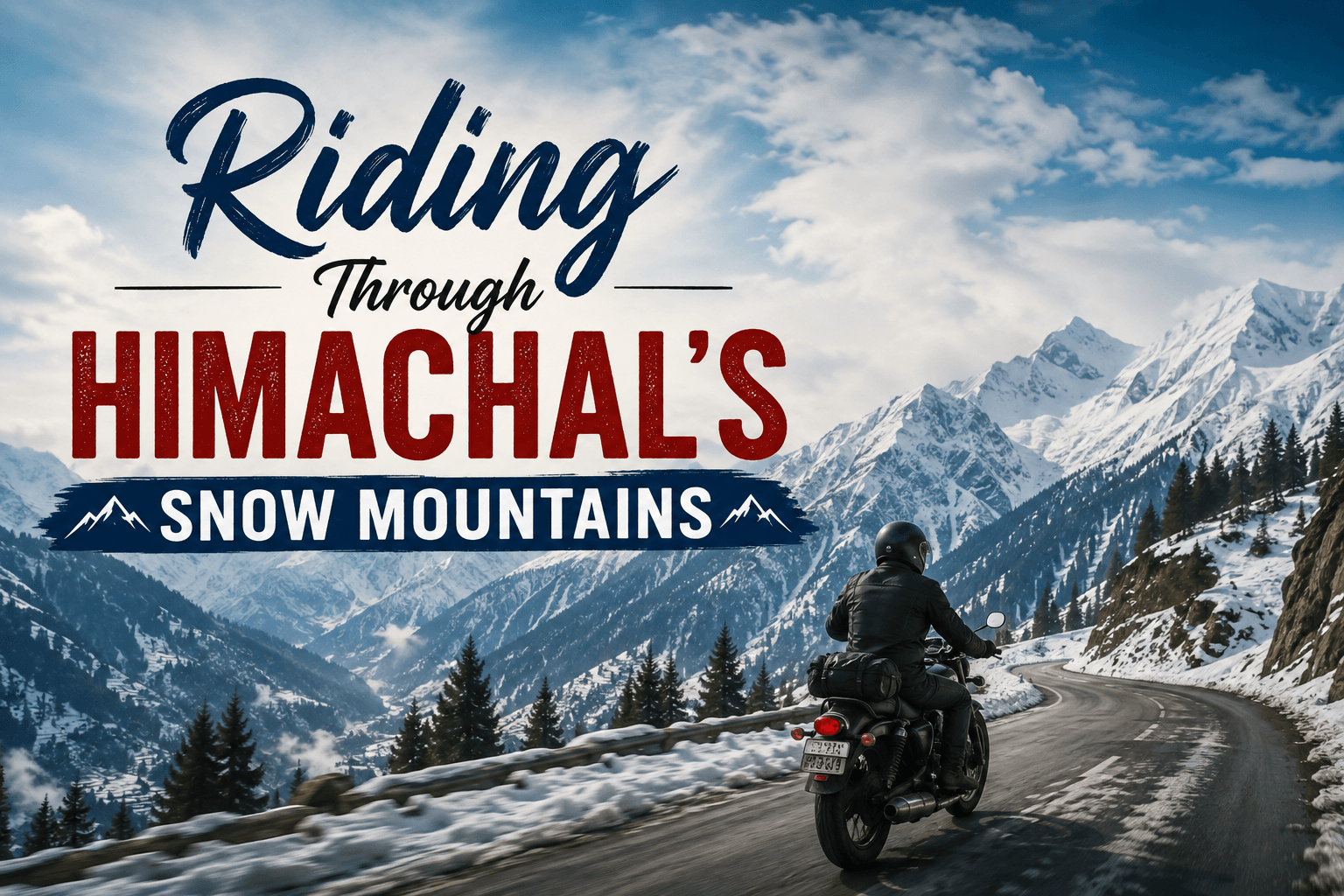
The Kullu-Manali belt of Himachal Pradesh is instantly recognisable to anyone who has travelled it — winding, snow-flanked roads, dusk-lit peaks, and a convoy of riders moving together through a landscape shaped by altitude, pine forests and glacial rivers. Often called the gateway to the Trans-Himalayan world, this region offers a rare mix of accessibility and raw mountain drama, which is exactly why it's become such a popular biking destination.
Manali: The Heart of the Ride
Sitting at the northern end of the Kullu Valley, over 6,000 feet above sea level, Manali is the natural starting point for a biking trip. Framed by snow-covered mountains and thick deodar forests, the town has long been a base for nature lovers and adventure seekers. From here, riders can head toward routes like Rohtang Pass, the Leh-Ladakh highway and Spiti Valley, or take shorter, equally scenic detours to Solang Valley, Old Manali, Naggar Castle and the banks of the Beas River. Easy bike rentals, biker-friendly stays, and a road network that hugs the mountainside make Manali the obvious hub.
Kullu Valley: The Valley of the Gods
Just south of Manali lies Kullu, often called "Dev Bhumi" for its many Hindu, Buddhist and Sikh pilgrimage sites. The valley's hillsides are blanketed in pine, deodar forest and apple orchards, with the Beas River cutting through it, offering rafting, camping and riverside stops. A ride between Manali and Kullu, roughly 42 km, is one of the most popular short biking routes in the region, with panoramic mountain views the entire way.
Solang Valley and Rohtang Pass: Where the Snow Begins
Heavy snow cover is characteristic of the higher stretches near Solang Valley and Rohtang Pass. Solang Valley, known for snow-capped peaks and open meadows, is a hub for paragliding, skiing and zorbing, while Rohtang Pass — at nearly 13,050 feet — is one of the most dramatic high-altitude crossings in the Indian Himalayas, connecting Manali to the remote valleys of Lahaul and Spiti. Due to heavy snowfall, the pass is typically closed to vehicles from around November to May, so riding through slushy, snow-lined roads is best done just before or after that closure window.
Why Riders Choose This Route
What makes this stretch of Himachal so popular with bikers is the sheer variety packed into a short distance: pine forests give way to snowfields, quiet village roads open onto sweeping valley views, and the temperature shifts noticeably within a single ride. Group trips are especially common because the mountain roads reward riding in convoy — it's safer on wet or icy patches, and turns the journey into a shared experience rather than just a means of reaching a destination.
Dusk lighting, tail lights reflecting on wet roads, and snow-covered peaks all explain why this specific pocket of Himachal Pradesh keeps drawing riders back, season after season.