
Golden Triangle India Tour Package – Experience India's Iconic Destinations
By Nidhi Tiwari
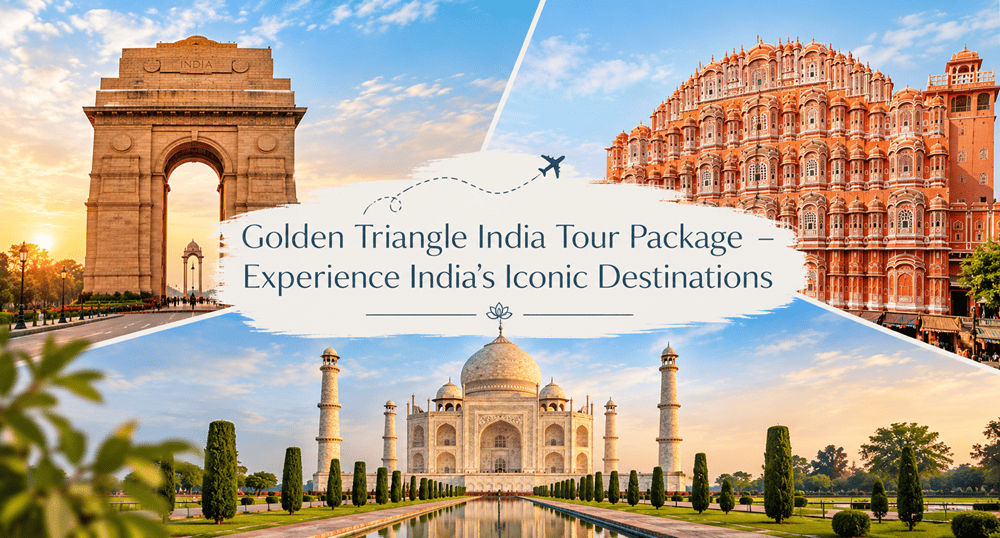
If there is one journey that captures the soul of India in a single sweep, it is the Golden Triangle. Connecting three of the country's most historically rich and culturally vibrant cities — Delhi, Agra, and Jaipur — this legendary circuit has earned its place as the most popular tour package for travelers visiting India for the first time. Within a compact geographic triangle, you get to witness Mughal splendor, colonial history, royal Rajasthani heritage, and the pulse of modern India, all woven together into one unforgettable itinerary.
Whether you're a history enthusiast, a photography lover, or someone simply looking to experience India's diversity in a short trip, the Golden Triangle tour package offers the perfect introduction. Let's take a closer look at why this route continues to enchant millions of travelers every year.
Why Choose the Golden Triangle Tour?
The Golden Triangle is more than just a travel route — it's a curated journey through centuries of art, architecture, and culture. Each city on this circuit tells a different chapter of India's story, yet together they form a seamless narrative of the country's evolution from ancient kingdoms to a thriving modern nation.
• Compact and convenient: Delhi, Agra, and Jaipur are well connected by road and rail, making this a hassle-free multi-city trip.
• Rich diversity: From Mughal monuments to Rajput palaces, you experience multiple dynasties and architectural styles.
• Perfect for first-time visitors: The circuit offers a well-rounded taste of India's history, cuisine, and culture in a short duration.
• Ideal trip length: Most itineraries range from 4 to 7 days, making it easy to fit into any travel schedule.
Delhi: Where History Meets Modernity
Your Golden Triangle journey typically begins in Delhi, India's capital city and a fascinating blend of the old and the new. Old Delhi welcomes you with the majestic Red Fort, a UNESCO World Heritage Site that once served as the residence of Mughal emperors. Nearby, the bustling lanes of Chandni Chowk offer a sensory overload of spices, street food, and centuries-old bazaars.
A visit to the Jama Masjid, one of India's largest mosques, adds another layer of architectural grandeur, while a rickshaw ride through the narrow streets gives you an authentic glimpse of everyday life. In contrast, New Delhi showcases colonial-era landmarks such as India Gate, the Parliament House, and the elegant boulevards designed by Edwin Lutyens. The Qutub Minar, a towering minaret dating back to the 12th century, and the serene Humayun's Tomb, often considered a precursor to the Taj Mahal, round out Delhi's must-visit attractions.
Agra: Home to the Iconic Taj Mahal
No trip to India is complete without witnessing the Taj Mahal, and Agra is where this dream becomes reality. Built by Emperor Shah Jahan as a tribute to his beloved wife Mumtaz Mahal, this white marble mausoleum is universally regarded as one of the most beautiful buildings ever constructed. Watching the sun rise over its domes, casting a golden glow across the marble, is an experience that stays with travelers for a lifetime.
Beyond the Taj Mahal, Agra is home to the imposing Agra Fort, a red sandstone fortress that served as the main residence of Mughal emperors before the capital shifted to Delhi. A short drive from the city takes you to Fatehpur Sikri, an abandoned Mughal city that offers a hauntingly beautiful glimpse into 16th-century urban planning and architecture.
Jaipur: The Regal Pink City
The final stop on the Golden Triangle is Jaipur, the capital of Rajasthan, affectionately known as the Pink City for its terracotta-hued buildings. Jaipur immerses visitors in royal grandeur, with attractions like the Amber Fort, a hilltop citadel accessible by a scenic elephant or jeep ride, and the City Palace, which still houses the royal family and showcases an impressive museum of artifacts and costumes.
The Hawa Mahal, or Palace of Winds, with its honeycomb facade of 953 small windows, is one of the most photographed structures in India. History and science enthusiasts will also enjoy Jantar Mantar, an astronomical observatory built in the 18th century that features some of the world's largest stone sundials. In the evening, Jaipur's vibrant bazaars offer the perfect opportunity to shop for block-printed textiles, gemstones, and traditional Rajasthani handicrafts.
What to Expect from a Golden Triangle Tour Package
A well-planned Golden Triangle tour package typically includes comfortable accommodation, private or shared transportation between cities, guided sightseeing with knowledgeable local guides, and curated experiences such as heritage walks, cooking classes, or cultural performances. Most packages can be customized based on your travel dates, budget, and interests, whether you're looking for a luxury experience with heritage hotels or a more budget-friendly backpacker-style adventure.
Many tour operators also offer extensions to nearby destinations such as Ranthambore National Park for a wildlife safari, or Pushkar for a spiritual detour, allowing you to enrich your itinerary even further.
Best Time to Visit
The ideal time to embark on a Golden Triangle tour is between October and March, when the weather across Delhi, Agra, and Jaipur is pleasantly cool and comfortable for sightseeing. Summers (April to June) can be extremely hot, especially in Rajasthan, while the monsoon season (July to September) brings humidity and occasional travel disruptions.
Final Thoughts
The Golden Triangle India tour package is more than just a checklist of monuments — it's an immersive journey through the empires, artistry, and traditions that have shaped India over centuries. From the grandeur of the Taj Mahal to the royal charm of Jaipur's palaces and the vibrant chaos of Delhi's streets, this circuit offers something for every kind of traveler. If you're planning your first trip to India, there is no better way to begin than with the timeless magic of the Golden Triangle.
Frequently Asked Questions (FAQs)
1. What is the Golden Triangle tour in India?
The Golden Triangle refers to a popular tourist circuit connecting Delhi, Agra, and Jaipur — three cities that form a triangular route on the map. It showcases India's Mughal and Rajput heritage, including iconic sites like the Taj Mahal, Red Fort, and Amber Fort.
2. How many days are needed for the Golden Triangle tour?
Most Golden Triangle tour packages range from 4 to 7 days. A 4-5 day trip covers the essential highlights, while a 6-7 day itinerary allows for a more relaxed pace with additional excursions such as Fatehpur Sikri or Ranthambore National Park.
3. What is the best time to do the Golden Triangle tour?
The best time to visit is between October and March, when the weather is cool and pleasant. Summer months (April to June) can be very hot, particularly in Agra and Jaipur, so it's best avoided if you're sensitive to heat.
4. How do I travel between Delhi, Agra, and Jaipur?
Travelers usually move between the three cities by private car, tourist coach, or train. The Delhi-Agra route is well served by fast trains like the Gatimaan Express, while Agra to Jaipur and Jaipur to Delhi are typically covered by road, taking approximately 4-5 hours each.
5. Is the Golden Triangle tour suitable for first-time visitors to India?
Yes, it is considered the ideal introduction to India for first-time travelers. The short distances between cities, well-developed tourist infrastructure, and concentration of iconic landmarks make it an easy, enriching, and manageable way to experience the country's history and culture.