
Ganesh Chaturthi in Maharashtra: Why, How & Where It Is Celebrated
By Nidhi Tiwari
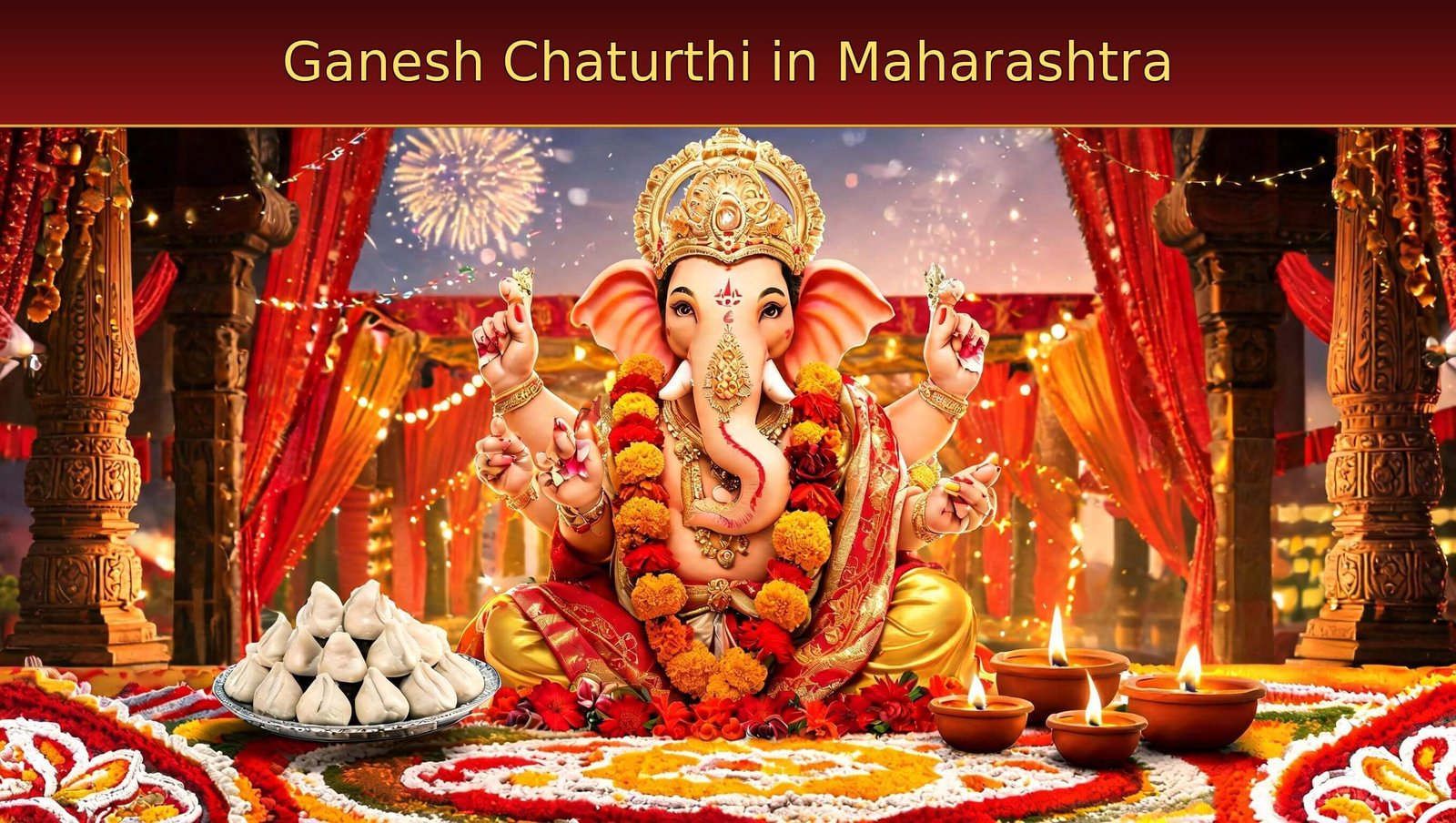
Few festivals capture the spirit of a state quite like Ganesh Chaturthi does in Maharashtra. For ten days every year, cities and villages across the state transform as Lord Ganesha is welcomed into homes and neighborhoods with music, devotion, and elaborate decoration, before being ceremonially immersed in rivers, lakes, and the sea. In 2026, Ganesh Chaturthi falls on Monday, September 14, with the ten-day celebration concluding on Anant Chaturdashi, the grand immersion day, on Friday, September 25. Here's a complete look at why the festival matters so deeply in Maharashtra, how it's celebrated, and where to experience it at its most spectacular.
The Mythological Significance of Ganesh Chaturthi
Ganesh Chaturthi marks the birth of Lord Ganesha, the elephant-headed son of Lord Shiva and Goddess Parvati, celebrated on the fourth day of the waxing moon in the Hindu month of Bhadrapada, which typically falls in August or September. Ganesha is revered across Hindu tradition as the remover of obstacles and the god of wisdom, prosperity, and new beginnings, which is why he is traditionally invoked first before any major undertaking, ceremony, or festival. The festival honors this role by welcoming a Ganesha idol into the home or a community space as an honored guest, worshipping him for a set number of days, and then bidding him farewell with the belief that he carries away the difficulties of the year with him.
Why Ganesh Chaturthi Became a Public Movement in Maharashtra
While Ganesh Chaturthi has been observed as a private, home-based festival for centuries, its transformation into Maharashtra's defining public celebration has a distinctly political and social history. In 1893, the freedom fighter and social reformer Lokmanya Bal Gangadhar Tilak reimagined Ganesh Chaturthi as a public, community-wide event, known as Sarvajanik Ganeshotsav, specifically to bring people together across caste and class lines at a time when the British colonial government restricted large political gatherings. By framing the festival around a beloved deity, Tilak created a legitimate, large-scale platform for public assembly, cultural expression, and, subtly, nationalist sentiment, all under the banner of religious celebration. That model of community-organized, neighborhood-level Ganesh mandals, publicly worshipped and celebrated through processions, endures largely unchanged as the backbone of the festival in Maharashtra today.
How Ganesh Chaturthi Is Celebrated: Rituals and Traditions
The festival unfolds through a fairly consistent sequence of rituals, whether celebrated in a private home or by a large community mandal. In the weeks leading up to the festival, families and organizing committees select and commission a clay Ganesha idol, ranging from a few inches tall for home worship to towering, multi-story creations for the largest public pandals.
On the day of Ganesh Chaturthi itself, the idol is welcomed into the home or pandal during an auspicious midday window known as the Madhyahna Muhurat, since Ganesha is traditionally believed to have been born around midday. This installation ceremony, called Pranapratishtha, involves a priest chanting Vedic mantras to invoke the deity's presence into the idol, followed by Shodashopachara Puja, a sixteen-step ritual of offerings that includes flowers, durva grass, red hibiscus, coconut, and jaggery.
For the following days, families and communities perform daily morning and evening aarti, sing devotional bhajans, and offer modak, a steamed or fried sweet dumpling believed to be Ganesha's favorite food, along with other Maharashtrian sweets like karanji. Many households also observe a light fast or eat only satvik food during the installation period as a mark of devotion.
The festival traditionally lasts one and a half, five, seven, or ten days depending on family or community custom, with the ten-day observance being the most common and elaborate version practiced widely across Maharashtra. It concludes with Ganesh Visarjan, the immersion of the idol in a river, lake, or the sea, accompanied by a final aarti and a procession filled with music, dancing, and chants of "Ganpati Bappa Morya, Pudhchya Varshi Lavkar Ya," a farewell phrase asking Ganesha to return again next year.
Ganesh Chaturthi in Mumbai: The Epicenter of Public Celebration
Nowhere is Ganesh Chaturthi celebrated with more scale and intensity than in Mumbai, where thousands of neighborhood mandals compete each year to build the most elaborate pandal and the tallest, most artistically decorated idol. Lalbaugcha Raja, located in the Lalbaug area of central Mumbai, is arguably the most famous Ganesh idol in the country, drawing lines of devotees that can stretch for hours and, on peak days, run through the night, as people travel from across India specifically to seek darshan. Other major Mumbai mandals include the GSB Seva Mandal in King's Circle, known for insuring its heavily gold-ornamented idol for a substantial sum each year, and Mumbaicha Raja in Ganesh Galli, one of the oldest public Ganesh mandals in the city, dating back to the early days of the Sarvajanik Ganeshotsav movement. The Siddhivinayak Temple in Prabhadevi, while a permanent shrine rather than a temporary pandal, also sees an extraordinary surge of visitors throughout the festival period.
Ganesh Chaturthi in Pune: Tradition Meets Grandeur
Pune holds a special place in the festival's history as the city where Tilak first organized the public Ganeshotsav movement, and it remains one of the most important centers of celebration today. The Dagdusheth Halwai Ganpati, one of the oldest and most revered public Ganesh idols in Maharashtra, draws massive crowds and is known for its heavily jewelry-adorned idol and immaculately maintained pandal. Pune is also home to the Panchganpati, five historically prominent mandals collectively regarded as the city's most important Ganesh celebrations, including Kasba Ganpati, considered the presiding deity of the city and traditionally the first idol installed and the first immersed each year, a symbolic honor tied to the city's civic identity.
Beyond the Big Cities: Ganesh Chaturthi Across Maharashtra
While Mumbai and Pune dominate headlines for scale, Ganesh Chaturthi is celebrated with equal devotion in smaller cities and villages throughout Maharashtra, including Nashik, Nagpur, Kolhapur, and countless towns along the Konkan coast, where the festival often carries particularly strong family and ancestral significance, with many Mumbai-based families returning to their native villages specifically to celebrate together. Coastal Konkan celebrations are often quieter and more intimate than the massive urban pandals, centered heavily on family tradition, home-cooked festival food, and close-knit community processions to the local river or sea for visarjan.
The Environmental Conversation Around Ganesh Visarjan
In recent decades, the traditional use of Plaster of Paris idols and chemical paints for Ganesh immersion has raised significant environmental concerns, since these materials dissolve slowly and can harm water bodies and aquatic life. This has led to a growing eco-friendly movement across Maharashtra, with increasing numbers of families and mandals opting for idols made from natural clay (shadu mati) and biodegradable, non-toxic paints, along with designated artificial immersion tanks set up by municipal corporations in cities like Mumbai and Pune as a lower-impact alternative to immersing in natural water bodies. Many younger devotees and civic organizations now actively promote these eco-conscious practices as an evolution of the festival's tradition rather than a departure from it.
Final Thoughts
Ganesh Chaturthi in Maharashtra is far more than a religious observance; it's a display of community organization, artistic craftsmanship, and cultural identity that has evolved continuously since Lokmanya Tilak first transformed it into a public movement in 1893. Whether experienced through the roaring crowds of Lalbaugcha Raja in Mumbai, the historic grandeur of Pune's Panchganpati, or a quiet family celebration in a Konkan village, the festival offers a genuinely immersive window into Maharashtrian culture, and for travelers visiting during the ten-day window around September 14 to 25, 2026, it's an experience unlike any other time to visit the state.
Frequently Asked Questions
When is Ganesh Chaturthi in 2026?
Ganesh Chaturthi 2026 falls on Monday, September 14, marking the start of the ten-day Ganeshotsav festival. The celebration concludes with Ganesh Visarjan, the grand idol immersion, on Anant Chaturdashi, Friday, September 25, 2026.
Why is Ganesh Chaturthi celebrated so widely in Maharashtra specifically?
While Ganesh Chaturthi is celebrated across India, its large-scale public form originated in Maharashtra when Lokmanya Bal Gangadhar Tilak organized the first Sarvajanik (public) Ganeshotsav in Pune in 1893, using the festival to unite communities and create a platform for gathering during British colonial rule. That tradition of neighborhood-organized public mandals remains strongest in Maharashtra today.
What is the significance of modak during the festival?
Modak, a steamed or fried sweet dumpling typically filled with coconut and jaggery, is considered Lord Ganesha's favorite food and is offered to the idol as prasad throughout the festival. It's one of the most iconic food traditions associated with Ganesh Chaturthi in Maharashtrian households.
Which are the most famous Ganesh mandals to visit in Maharashtra?
In Mumbai, Lalbaugcha Raja, GSB Seva Mandal, and Mumbaicha Raja in Ganesh Galli are among the most visited. In Pune, the Dagdusheth Halwai Ganpati and the historic Panchganpati group of five mandals, including Kasba Ganpati, are considered must-visit sites during the festival.
Why do some families keep the idol for only one and a half days while others keep it for ten?
The duration of worship, whether one and a half, five, seven, or ten days, is largely a matter of family or community tradition rather than religious mandate. Ten-day observances tend to be more elaborate and are especially common among larger public mandals, while many households follow shorter durations passed down through generations.
Is Ganesh Chaturthi a public holiday in Maharashtra?
Yes, Ganesh Chaturthi is observed as a public holiday in Maharashtra, along with several other Indian states including Karnataka, Goa, Andhra Pradesh, and Telangana, though it is not a holiday nationwide.
What should travelers know before visiting Mumbai or Pune during the festival?
Expect significant traffic congestion and crowding, particularly around major pandals and during visarjan processions, which can run late into the night. Booking accommodations well in advance and allowing extra travel time between destinations is strongly recommended if visiting during peak festival days or the final immersion days.