
Famous Forts of Rajasthan: A Journey Through Royal History
By KindQuest Travel
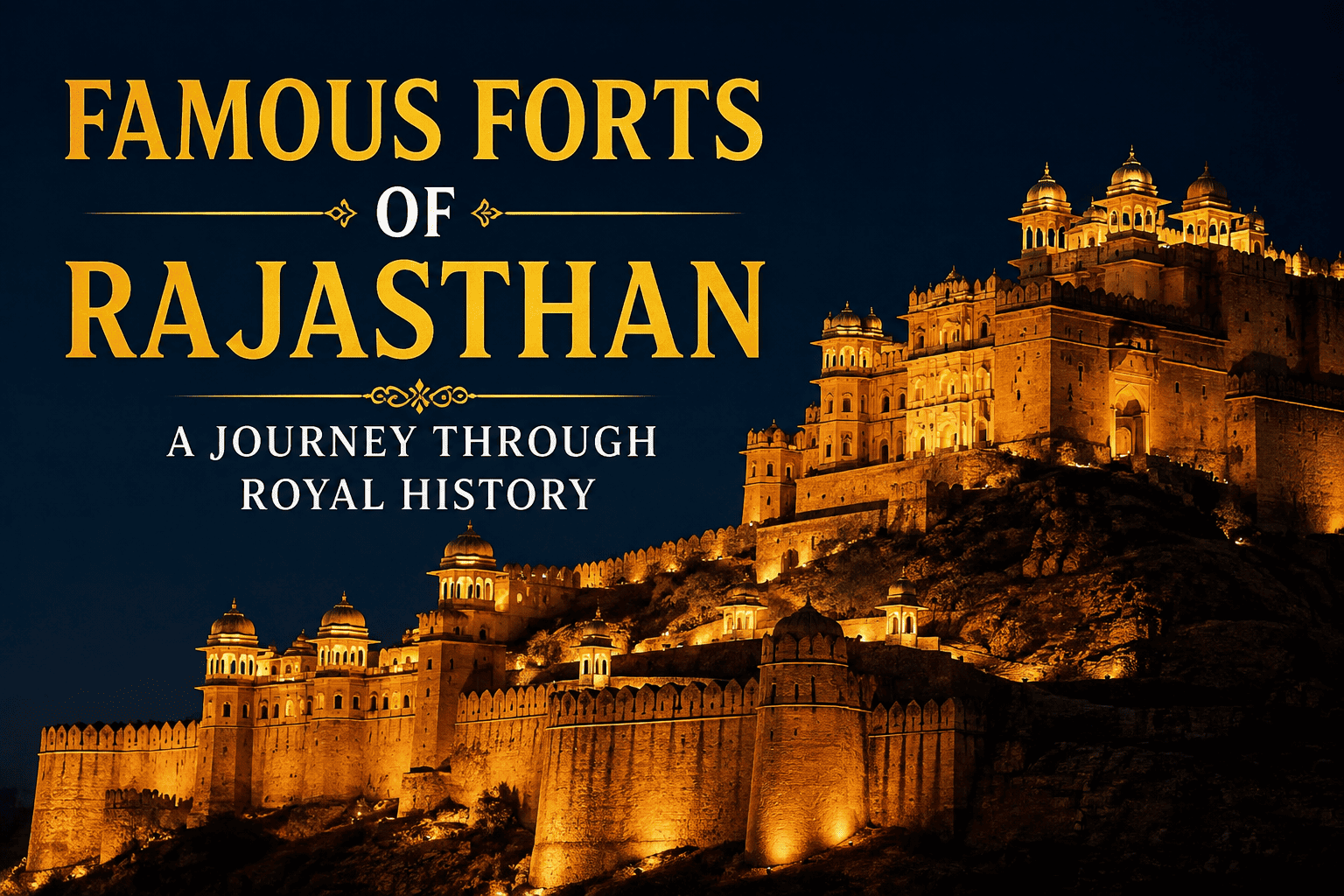
No region in India tells its history through architecture quite as directly as Rajasthan. For centuries, the Rajput clans that ruled this land built fortresses not as monuments but as necessities. Six of these forts, spread across the Aravalli hills, were together inscribed as the Hill Forts of Rajasthan UNESCO World Heritage Site in 2013.
The Six UNESCO-Listed Hill Forts
1. Chittorgarh Fort
The largest fort in India by area, and the most historically significant, having served as the capital of Mewar for centuries and witnessed three major sieges. The Vijay Stambha, a soaring victory tower, and the story of Rani Padmini remain central to Rajasthani folklore.
2. Kumbhalgarh Fort
Built by Rana Kumbha in the 15th century, famous for having the second-longest continuous wall in the world after the Great Wall of China, stretching some 36 kilometres. Breached only once, through a shortage of drinking water rather than direct defeat — also the birthplace of Maharana Pratap.
3. Ranthambore Fort
Unusual for sitting inside what is now Ranthambore National Park, dating back to the 10th century, combining serious medieval history with the chance of spotting a tiger on the same trip.
4. Gagron Fort
Unique for being surrounded by water on three sides, with the Kali Sindh and Ahu rivers forming a natural moat — a water-and-hill fort that never had a permanent civilian township attached.
5. Amber Fort (Amer Fort)
The most visited fort on this list, known for its blend of Rajput and Mughal architectural styles. The Sheesh Mahal, or Mirror Palace, is one of the most photographed interiors in Rajasthan.
6. Jaisalmer Fort
Rising out of the Thar Desert in golden sandstone, one of the very few "living forts" in the world, with roughly a quarter of the old city's population still residing within its walls.
Two More Forts Worth the Detour
Mehrangarh Fort, Jodhpur
Not part of the UNESCO listing but arguably Rajasthan's most visually dramatic fort, sitting on a 400-foot hill overlooking Jodhpur's blue-washed old city. Built in 1459 by Rao Jodha.
Junagarh Fort, Bikaner
Unusual for being built on flat ground rather than a hilltop, constructed in the late 16th century and never fell to an external attacker despite its lack of elevation.
Planning a Fort-Focused Rajasthan Itinerary
Jaipur, Jodhpur, Jaisalmer and Udaipur, near Chittorgarh and Kumbhalgarh, form a natural loop covering most of the forts on this list without excessive backtracking. Two to three days per major city allows enough time to see each fort properly. Early mornings are the best time to visit nearly every fort, and hiring a local guide at Chittorgarh and Amber Fort is worth the cost, since the history at both runs deep.
A trip built around Rajasthan's forts is really a trip through the region's entire political history — from Rajput resistance and sacrifice at Chittorgarh to the more diplomatic Mughal-aligned grandeur of Amber Fort.